
Services / Foreign Trade Documentation Tracking and Management
Foreign Trade Documentation Tracking and Management
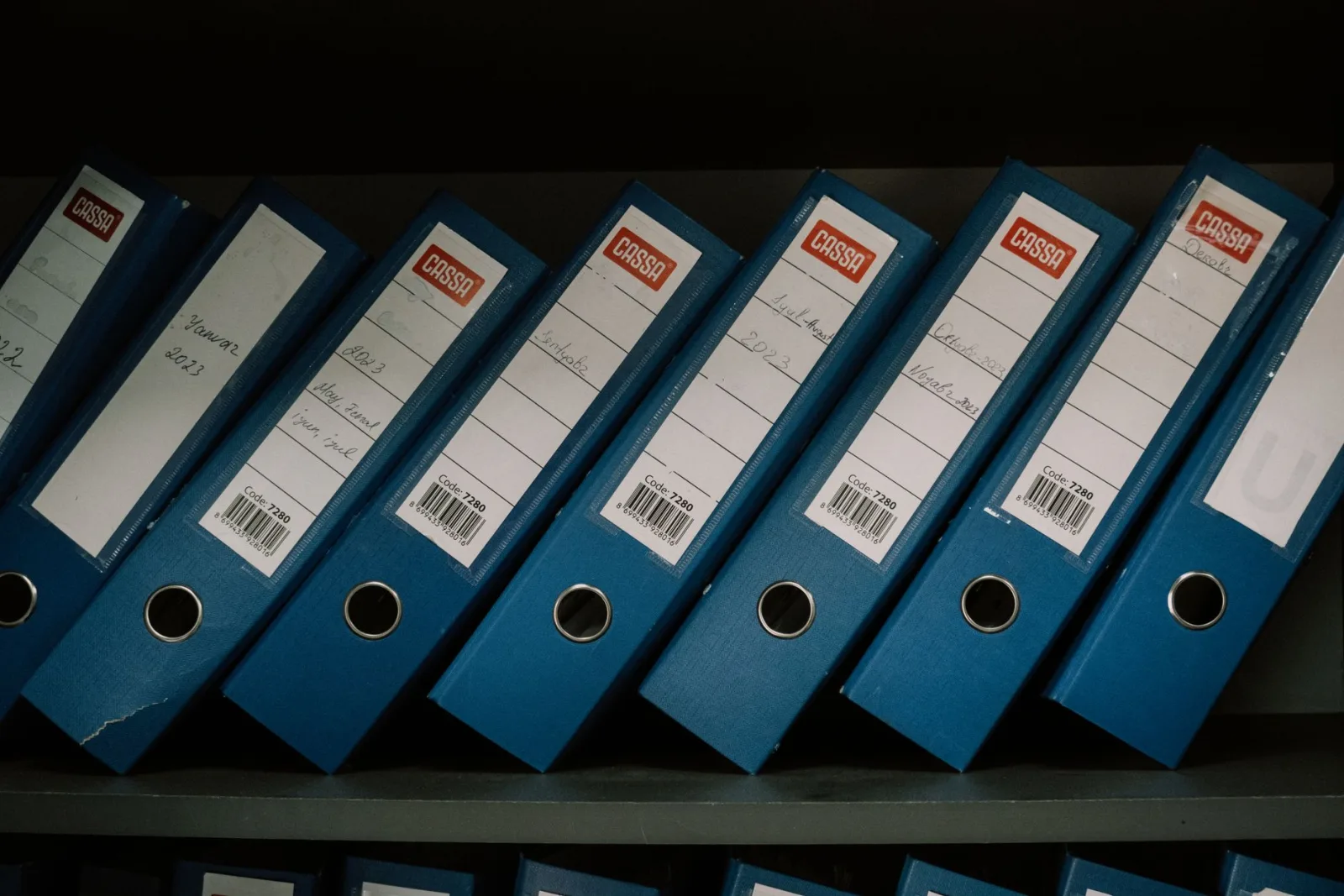
Collecting shipment documents, checking their consistency with each other, keeping a calendar for time-limited documents, and archive management.
What is foreign trade documentation tracking?
Foreign trade documentation tracking is the work of continuously monitoring that the documents belonging to a shipment are complete, consistent with one another, and within their period of validity. Its scope falls under three headings: checking consistency between documents (invoice, packing list, transport document), a renewal calendar for time-limited documents (movement certificates, permit and conformity certificates), and archiving the file so that it is ready for a subsequent audit.
Who It Is For
- Firms with heavy A.TR, EUR.1, and certificate of origin traffic in marble and fresh fruit and vegetable exports
- Firms managing time-limited permit and conformity certificates in agricultural product, chemical, and hospital equipment imports
- Firms with simultaneously open files at the Antalya, Mersin, Izmir, Istanbul, Gemlik, and Mudanya administrations
- Importers and exporters working with letters of credit who carry discrepancy risk due to document non-conformity
- Businesses that want to keep their archive in order against a post-clearance audit
- Firms that run documentation tracking through a single employee and whose process falters during leave and handover periods
How the Process Works
- 1Drawing up an inventory of the existing documents: which document belongs to which shipment, in which file
- 2Checking consistency of item, quantity, gross/net weight, and party details between the invoice, packing list, and transport document
- 3Checking the validity and endorsement status of origin and movement certificates (A.TR, EUR.1, Form A)
- 4Setting up a renewal calendar for time-limited permit, conformity, and control certificates, and assigning who is responsible for it
- 5Identifying missing or incorrect documents; completing them with the relevant chamber, union, laboratory, or correspondent
- 6Aligning the flow of bank and letter of credit documents with the shipment schedule
- 7Closing the file together with the declaration and its annexes, and placing it in the digital and physical archive
- 8Keeping the file in a condition where it can be presented complete in the event of a subsequent audit request
Timelines and limits you should know
The timelines below come from legislation, not from an ACR commitment. There may be exceptions depending on the product group and country; your specific file is checked case by case.
| Subject | Rule | Note |
|---|---|---|
| Validity period of the EUR.1 movement certificate | Generally 4 months from the date of issue | There may be exceptions depending on the agreement; this is checked on a country-by-country basis. |
| Issuing the EUR.1 retrospectively | Can be requested within 12 months after export | Its acceptance depends on the importing country's administration; it cannot be guaranteed. |
| Wording on a retrospectively issued certificate | The words "ISSUED RETROSPECTIVELY" are written in the "Remarks" box | Without this wording, the certificate is not considered to have been issued retrospectively. |
| Presentation period of the A.TR movement certificate | Limited by legislation | It is not assumed to be the same as EUR.1; it is verified separately. |
| Obligation to retain documents | The period set out in legislation | A subsequent audit can arrive within this period; the archive is set up accordingly. |
| Document presentation period under a letter of credit | Determined by the wording of the letter of credit; if the wording does not specify a period, 21 calendar days from the shipment date under UCP 600 | In every case, presentation must be made within the validity period of the letter of credit. |
Required Documents
- Invoice and packing list — checked so that item, quantity, gross/net weight, and party details match one another
- Transport document (bill of lading / CMR / air waybill) — issue date and party details are compared against the shipment schedule
- Origin and movement certificates (A.TR, EUR.1, Form A, certificate of origin) — endorsement status and validity period are monitored
- Import/export permit, conformity, and control certificates — expiry date and renewal paperwork are put on a calendar
- Letter of credit wording and bank correspondence — the list of documents and the presentation period are aligned with the shipment
- Customs declaration and its annexes — the file's archive reference is built on the declaration number
- The firm's authorisation documents (signature circular, power of attorney) — validity period and scope are checked
Factors Affecting Time/Cost
- Number of shipments and the variety of documents per file
- Whether a preferential trade agreement exists depending on the origin/destination country, and which type of movement certificate is required
- The processing schedule of the institution issuing the document (chamber, union, laboratory, ministry unit)
- Whether the document is issued digitally or physically; any wet-ink signature or endorsement requirement
- Analysis, quarantine, or conformity requirements specific to the product group
- How complete the documentation arrives from the firm — the item that extends the process most is a document completed after the fact
Frequently Asked Questions
What happens if the EUR.1 certificate's validity period has expired?+
EUR.1 is generally valid for 4 months from its date of issue; a certificate past this period may not be accepted for preferential tariff treatment in the importing country, and the buyer faces the normal duty rate. The certificate can be issued retrospectively within 12 months after export, with the wording "ISSUED RETROSPECTIVELY" entered in the "Remarks" box. Acceptance again lies with the importing country's administration and cannot be guaranteed in advance. The real solution is to put the period on a calendar from the outset.
What happens if there is a problem with the A.TR movement certificate's period or endorsement?+
The A.TR certificate's presentation period is limited by legislation; a period or endorsement problem can prevent the goods from benefiting from the Türkiye–EU free-circulation regime, and customs duty comes into play. When the problem is caught in the importing country, the window to fix it becomes shorter, because the correction runs through the chamber and customs administration in the exporting country. This is why the certificate is checked for endorsement and validity before the shipment goes out.
What should be done if the quantity on the invoice does not match the weight on the packing list?+
If the mismatch is caught before the declaration, the documents are corrected and the problem is closed before it grows. If it is noticed after the declaration, the procedure for correcting or cancelling the declaration is followed, and depending on the case a penalty risk arises. The same inconsistency is grounds for a discrepancy at the bank in the letter of credit and banking operations process, and it stops payment. This is why item, quantity, gross/net weight, and party details are compared across the three documents (invoice, packing list, transport document) before the declaration.
Which documents are requested in a post-clearance audit?+
The customs administration typically requests: the customs declaration and its annexes, the commercial invoice, the packing list, the transport document (bill of lading/CMR), origin and movement certificates, payment and bank records, and, where needed, order and commercial correspondence. What matters is not simply that the documents exist, but that they corroborate one another. The retention obligation continues for the period set out in legislation; files are archived throughout this period so that they match the declaration.
Who tracks the renewal of time-limited permit and conformity certificates?+
The obligation rests with the importing or exporting firm in every case; it cannot be delegated away. In practice, tracking is often left to a single employee's memory, and it falters during leave, staff departures, or the busy season. In this service, the expiry date, renewal paperwork, and the institution to apply to are recorded for every time-limited certificate; the reminder is sent before the period runs out. Responsibility stays with you, tracking is with us.
Some of our documents are electronic and some are wet-ink signed. How should we keep the archive?+
What matters is how the document was issued: for a digitally issued document, the verification record is what counts; for a wet-ink signed or endorsed document, the original itself is what counts. This is why, in a mixed archive, two copies are kept together — the digital copy for access, the original for presentation. The file is matched to a single reference through the declaration number; what a subsequent audit looks for is not that the document exists, but whether you can show which declaration it belongs to.
How does this service differ from foreign trade consultancy?+
Foreign trade consultancy deals with decisions: which customs regime will be chosen, which incentive will be used, which tariff position the product will be fixed under. Documentation tracking begins once those decisions have been made: where the document actually is, whether it is still valid, which one is missing, whether the file is ready for audit. One is the design side, the other is the operating side. The two services can be taken together or separately.
Can the documentation tracking service be taken without customs brokerage?+
Yes. Firms that run their declaration procedures with their own team or through another broker can work with us for the documentation side alone. In this case, the scope is the document inventory, consistency checks, deadline tracking, and archive order. The declaration and registration process is outside the scope; responsibility for the declaration remains with the broker concerned.
The Turkish original of this page was reviewed by our licensed customs broker. This translation is provided for information; the Turkish version prevails.
Get a Quote
Foreign Trade Documentation Tracking and Management — fill in the form for detailed information and a quote.