
Sectors / Export Customs for Manufacturers: Raw Materials, Intermediate Goods and Finished Products
Export Customs for Manufacturers: Raw Materials, Intermediate Goods and Finished Products
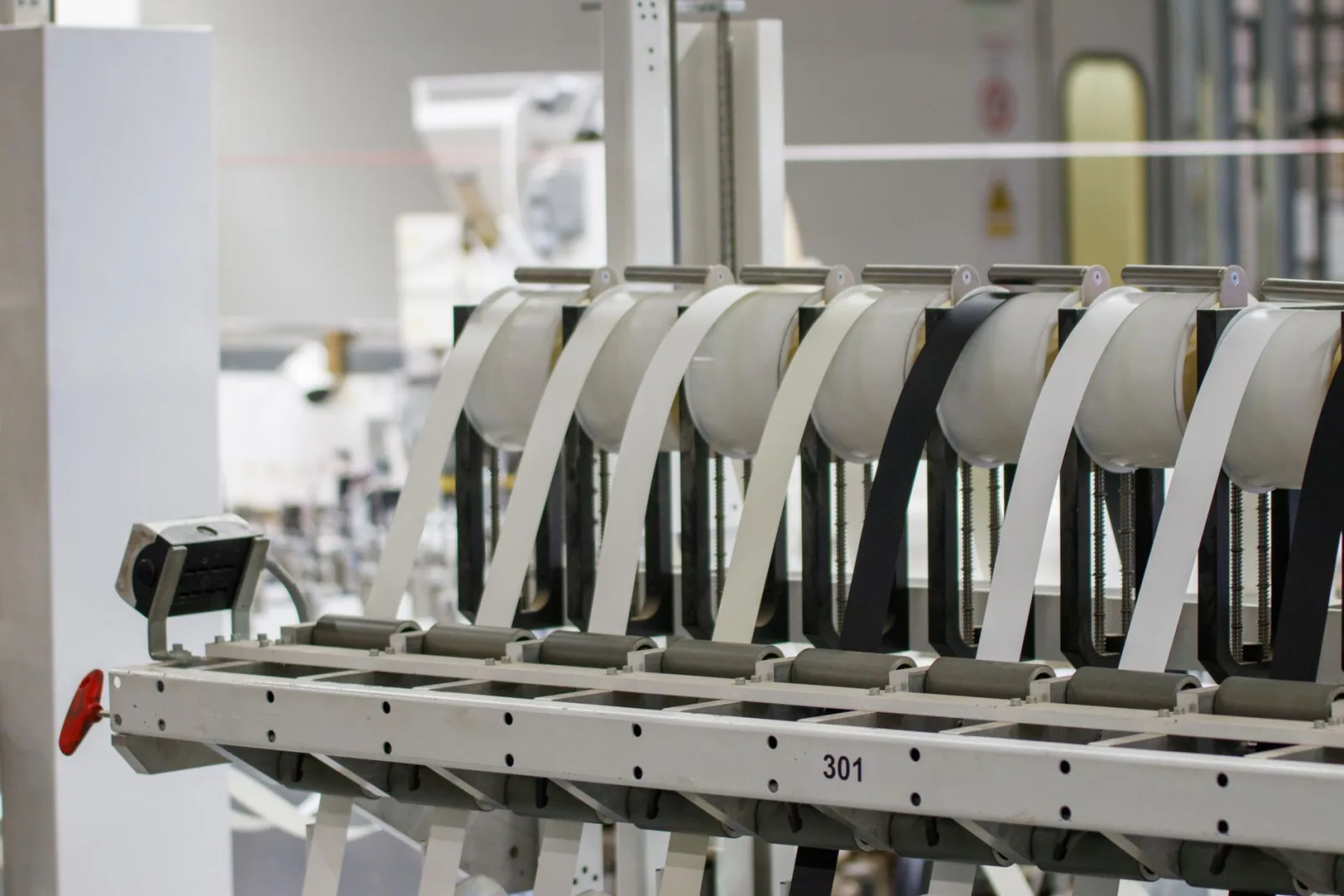
For manufacturers, customs is not a one-off transaction but part of the production plan: the regime under which imported inputs enter, the scrap rate in the product recipe, the origin of the exported product, and the template for repeat shipments are all linked. ACR Gümrük Müşavirliği handles raw material, intermediate goods and finished product shipments as one connected whole; operations cover Türkiye nationwide, with Antalya, Mersin, Istanbul and Izmir as the main hubs.
For a manufacturer, customs is not a process that starts once the shipment is ready. The chain begins much earlier, at the moment it is decided under which regime an imported input will enter the country. With that decision, the company buys not just a declaration but an obligation: documenting that the imported input became the exported product, showing how much of it went into the product and how much was lost as scrap, and closing out the document within its deadline. A trader who simply clears goods through customs and sells them has none of this; a manufacturer has it every month.
The second difference is repetition. A manufacturer sends the same product to the same buyer over and over. This is not a routine that is decided afresh for each shipment, but one that is set up once and then operated: once the tariff heading, unit, packaging description, document set and delivery term are correctly settled the first time, every following shipment gets shorter. But the reverse works just as fast — a misclassification or a missing basis for origin made on the first shipment gets copied onto dozens of declarations before it is noticed. In manufacturing, an error is not a one-off; it is serial.
ACR Gümrük Müşavirliği has been doing this work since 2003, with a team experienced in raw material, intermediate goods and finished-product shipments; the same team follows an inward processing document from opening to closure. The sections below cover the points manufacturers most often get stuck on in customs. For factories working with natural stone, see our marble exports page, and for manufacturers running a cold chain, see fresh fruit and vegetable exports — both pages cover the specific pitfalls of those goods separately.
Export Customs for Manufacturers: Raw Materials, Intermediate Goods and Finished Products — What We Pay Attention to in the Process
The regime decision is made before production, not after the shipment
Bringing an imported input into free circulation by paying its duty is a different commercial story from bringing it in under inward processing — even though it is the same goods. Under inward processing, the input's duty is either deferred against a guarantee or refunded after the export takes place; in return, the company takes on the obligation to document that the input became the exported product and to close the document within its deadline. The real risk here is not the duty itself but tracking it: which import declaration counts against which export, how much quantity remains under the document, and where the clock stands can easily slip through the cracks at production pace. A document that cannot be closed can mean the deferred duty coming due together with late-payment interest, plus a penalty; the outcome is at the authority's discretion and cannot be guaranteed in advance. That is why the regime choice should be made on the day the first order comes in — by discussing whether the export undertaking is realistic.
The product recipe and scrap rate: the arithmetic of closing the file
How much of an input imported under inward processing went into the exported product, and how much was lost as shavings, trimmings, rejects or evaporation, is shown by the product recipe (bill of materials). This table is not kept for accounting; it is kept for closing the file: if the declared scrap rate is lower than actual production, part of the imported input cannot be credited against the export and duty becomes due on that part; a scrap rate set higher than reality raises questions of its own. If part of the material set aside as scrap is actually sellable (metal scrap, yarn waste, second-quality parts), that needs to be assessed separately — waste and a saleable by-product are not the same thing. The product recipe must be built from production records, the formula and actual consumption; a table built on rounded estimates will come back to haunt the company at the closing stage.
An imported input can change the origin of the exported product
Goods being shipped from Türkiye is not the same thing as those goods being considered Turkish-origin. Preferential tariff treatment depends on the product meeting the rule of origin in the relevant agreement: criteria such as whether the tariff heading of the imported input changes as a result of production, whether a specific working/processing stage took place in Türkiye, or whether the ratio of input value to product value stays within the rule. This is the difference that matters to a manufacturer and not to a trader: the same product can fall outside the rule of origin simply because a supplier changed — for example, because a third-country input replaced a domestic one — and the buyer then does not get the preferential tariff it expected. A commonly confused point: the A.TR movement certificate shows that the goods are in free circulation, not their origin; proof of origin is a separate document, and its basis is the supplier declarations for the imported inputs. In addition, under some preferential arrangements, being exempt from duty on the input and issuing a preferential proof of origin for the same product may not be possible at the same time; this possibility needs to be checked before the shipment.
The same shipment repeats over and over — the right way and the wrong way alike
In serial production, exports go out as shipments that copy one another. Set up correctly, this is the manufacturer's biggest advantage: the tariff heading is confirmed once, invoice and packing list fields are fixed, packaging and unit description are standardised, a long-term supplier declaration is obtained for repeat buyers, and there is nothing left to decide afresh with each shipment. Set up wrong, the same mechanism multiplies the error instead. A product with the wrong unit weight entered, a tariff heading confused with that of a second-quality grade, or a proof of origin issued without a basis becomes the problem not of a single shipment but of an entire run; in a post-clearance audit, it is not one declaration that gets examined but the whole run. For manufacturers, the preparation time spent on the first shipment is an investment spread across every shipment that follows.
Production schedule, freight booking and customs run on the same calendar
A manufacturer works to a contractual delivery date; the buyer's production line, assembly schedule or shelf plan depends on that date. Three separate clocks work together on this calendar: the date the goods leave the production line, the carrier's booking and cut-off time, and completion of the customs process. A slip in one shows up in the others — a batch that leaves the line two days late can turn into a much longer delay because of a missed vessel departure. When an order is split into partial shipments, a single order is divided across multiple declarations and document sets; for letter-of-credit transactions, whether partial shipment is permitted needs to be checked separately. The right setup is to plan transport and customs steps backwards as soon as the production plan is issued; preparation that starts two days before the shipment cannot keep up with this schedule.
Samples, prototypes and products returning under warranty
Not all of a manufacturer's shipments are sales: samples sent to a buyer, a prototype taken to a trade fair and brought back, a faulty product returned under warranty, a part sent out for repair and returned. None of these are handled like an ordinary sales export, and each follows a different route — shipment free of charge, temporary export, temporary import, or dispatch and return for repair/maintenance. The critical point is which procedure is chosen when the goods leave: if a product known to be coming back is exported as an ordinary sale, the basis for relief weakens on its return and the product may be treated as if it were being imported a second time. For sample and trade-fair shipments to countries that accept it, an ATA Carnet route may be considered. For returning products, being able to link back to the original export declaration depends on the serial number and lot being tracked on the production side.
How the Process Works
- 1Products and inputs are mapped out: which input is imported, which is domestic; tariff headings for both the exported product and the inputs are determined together.
- 2The regime decision is made: will the input be released for free circulation, or brought in under inward processing; guarantee, export undertaking and closing obligation are discussed from the start.
- 3The product recipe and scrap rates are built from production records and the formula; the quantities covered by the document are derived from this data.
- 4The target market's rule of origin is checked product by product; supplier declarations are collected for the imported inputs, and the origin/movement certificate to be issued is decided.
- 5The shipment template is fixed: tariff, unit, packaging description, delivery term and document set; repeat shipments are produced from this template.
- 6The production schedule is matched to the transport plan; booking, cut-off time and the need for partial shipment are planned accordingly.
- 7After export, declaration closure, VAT refund and incentive file are followed up; where inward processing applies, import–export matching is carried out and the undertaking-closure file is prepared.
Required Documents
- Product recipe / bill of materials: a breakdown showing input quantity and scrap rate per unit of product
- For shipments under inward processing, a tracking record showing the scope of the permit/document and the quantities used and remaining
- For the undertaking-closure file, a list matching import and export declarations
- Supplier declarations showing the origin/free-circulation status of imported and domestic inputs — can be issued as a long-term declaration for repeat shipments
- A movement certificate or proof of origin depending on the target market (A.TR shows free circulation, not origin; origin is documented separately)
- Where the buyer requires it, a manufacturer's/conformity declaration plus test and analysis reports — matched to the lot number
- Temporary export declaration for samples, prototypes and trade-fair material; an ATA Carnet in countries that accept it
- For products returning under warranty or sent out for repair, a reference to the original export declaration plus a serial-number record
- Where wooden pallets, crates or stands are used, an ISPM-15-marked packaging record
Factors That Determine Timing
- Which regime the imported input entered under, and — where inward processing applies — the status of the guarantee, undertaking and closing steps
- Whether the product recipe and scrap rate are ready before the shipment
- Confirmation that the exported product meets the target market's rule of origin, and how long it takes to collect supplier declarations
- Whether it is a first shipment or a repeat shipment with an established template
- Whether the product requires a permit, inspection, analysis or certification
- Which inspection line the declaration falls into, and planning for physical inspection if required
- Whether the date the goods leave the production line lines up with the carrier's booking and cut-off time
- Whether the order is split into partial shipments, and whether that is permitted under letter-of-credit transactions
- Transport mode and departure point: sea freight by container, road freight toward Europe, or air freight
At a Glance
- The duty advantage on an input imported under inward processing depends on documenting that the input became the exported product and closing the document within its deadline; a document that cannot be closed can bring the deferred duty due together with late-payment interest.
- For manufacturers, the scrap rate is not an accounting line item but closing data: scrap declared lower than actual production means part of the imported input cannot be credited against the export.
- The A.TR movement certificate shows that goods are in free circulation, not their origin; for a manufacturer using imported inputs, the right to a preferential tariff is assessed separately under the rule of origin, and its basis is the supplier declarations for the imported inputs.
- In serial production, the export template is set up once: a wrongly set tariff or unit description affects not a single shipment but the entire run, until it is noticed.
- For samples, prototypes and warranty products known to be coming back, the basis for relief is set by the procedure chosen on the way out; goods exported as an ordinary sale may be treated as if imported a second time on return.
- ACR Gümrük Müşavirliği has been handling raw material, intermediate goods and finished product import-export since 2003; the same team follows an inward processing document from opening to closure.
Related Services
Frequently Asked Questions
We import raw material and export the finished product; should we go through ordinary import, or inward processing?+
The decision depends on whether you can genuinely meet the export undertaking. Inward processing gives a cost advantage by deferring the input's duty against a guarantee, or refunding it after export; in return it brings the obligation to close the document within its deadline. If your export programme is uncertain, that advantage can turn into a risk. We review your input-to-product matching and order visibility together and make the decision before the first import.
What happens if we cannot close our inward processing document within the deadline?+
The deferred or refundable duty can come due together with late-payment interest, and a penalty may be applied. It is not possible to say the exact outcome in advance; that is at the authority's discretion. What can be done is not leaving the closing to the last month: matching import and export declarations from the start and regularly tracking the remaining quantity and time lets you spot the need for an extension or revision early.
Can we declare the scrap rate as an estimate?+
No. The scrap rate directly determines how much of the imported input will be credited against the export at the closing stage; scrap declared lower than actual production brings duty due on the input left uncredited. The rate should be produced from the formula and actual consumption records, and updated whenever production changes. If part of the scrap is sellable (scrap metal, yarn waste, second quality), that needs to be assessed separately.
Our product contains an imported input; can our buyer in Europe get the preferential tariff?+
This depends on whether the product meets the rule of origin in the relevant agreement — criteria such as whether the tariff heading changes through production, whether a specific processing stage took place here, or whether the imported input's value stays within the rule are considered. The A.TR movement certificate does not answer this question; it shows free circulation, not origin. We assess this product by product and input by input, together with supplier declarations.
We send the same product to the same buyer every month; do we start from scratch with each shipment?+
No, the whole point is the opposite. On the first shipment, the tariff, unit, packaging description, delivery term and document set are fixed; a long-term supplier declaration can be obtained for repeat buyers. Later shipments are produced from this template. That said, the template needs to be reviewed again whenever the product, the input supplier or the packaging changes — because the same mechanism also repeats an unnoticed error every month.
The products we send for samples and trade fairs will come back; how should we export them?+
It is critical that goods known to be coming back are declared with the correct procedure on the way out. If a prototype exported as an ordinary sale comes back, the basis for relief weakens and the product may be treated as if it were being imported a second time. Depending on the situation, shipment free of charge, temporary export, or an ATA Carnet in countries that accept it is considered. Keeping the serial number and lot record on the production side is what makes matching possible on return.
How long will our shipment take, and will we make the delivery date?+
It would not be accurate to give a fixed timeframe; it varies by product, transport mode and the conditions on the day. The deciding factors are: the input's regime and closing steps, whether the basis for the proof of origin is ready, whether the product requires a permit/analysis, the inspection line the declaration falls into, and the carrier's booking and cut-off time. The realistic approach is to plan backwards from the delivery date and start preparation together with the production schedule.
The Turkish original of this page was reviewed by our licensed customs broker. This translation is provided for information; the Turkish version prevails.
Let's Talk About Your File
Export Customs for Manufacturers: Raw Materials, Intermediate Goods and Finished Products — let us assess your shipment. Fill in the form and our team will get in touch with you.