
Sectors / Customs Procedures for Marble Export
Customs Procedures for Marble Export
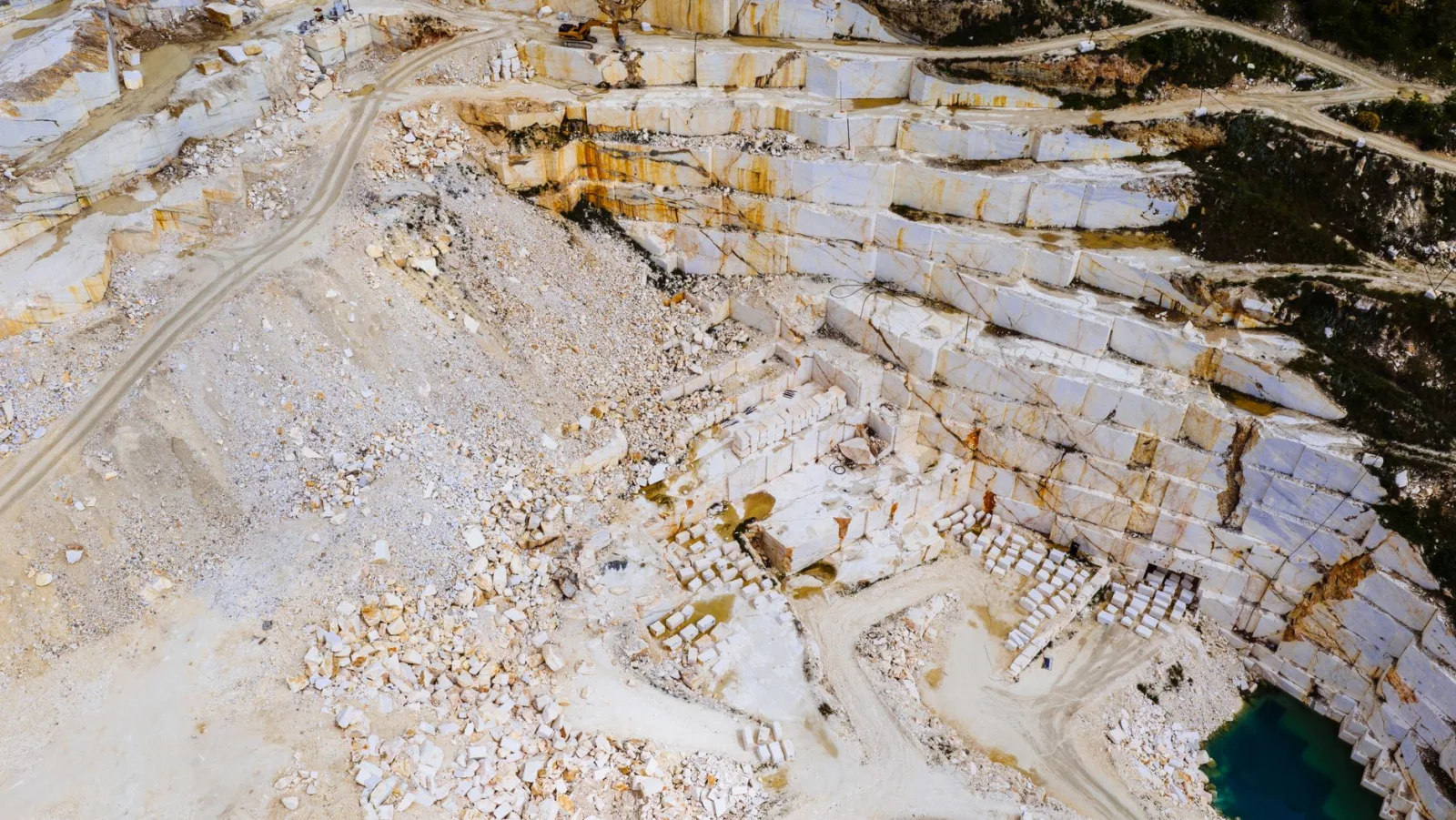
In marble exports, the customs-side critical points fall into three areas: making sure the block's declared dimensions and weight match the actual cargo, declaring the product under the correct GTİP according to its degree of processing, and securing the load inside the container through blocking. ACR Gümrük Müşavirliği manages all three under one roof, mainly around Antalya and Izmir.
Marble doesn't behave like other export cargo at the customs desk. It isn't boxed, standard-sized goods whose invoice quantity matches the scale weight one-to-one. A block straight from the quarry has an irregular geometry; its dimensions are calculated, its weight is estimated from density, and the actual weight often only becomes clear for the first time at the port. This is exactly where the gap between the declaration and the actual cargo originates.
The second distinguishing factor is weight itself. In marble shipments, the container's weight limit is reached before its volume is, so the loading plan is built around tonnage rather than cubic meters. How the load is distributed across the container floor, whether the blocks can shift, and how the wooden blocking is done aren't just the freight forwarder's concern — they're the declarant's problem too: a finding that surfaces during loading requires a correction on the declaration side.
For ACR Gümrük Müşavirliği, marble producers and marble factories are a priority export sector. The headings below cover the points where marble most often runs into trouble at customs. For the general flow of the process, see our export customs clearance page; for in-container load safety, see our cargo securing and independent loading survey page. For the standards and market-access differences of other stone types such as granite, travertine, and onyx, see our natural stone export page.
Customs Procedures for Marble Export — What We Pay Attention to in the Process
Declared dimensions and weight not matching the actual cargo
On paper, a marble block's volume is calculated as length × width × height; but a block straight from the quarry is never a true prism. Roughly hewn surfaces, chipped corners, and density that varies from block to block create a gap between the calculated cubic meters and the weight actually recorded on the scale. When this gap surfaces at inspection or at the port weighing, an amendment to the declaration may be required; the outcome is at the authority's discretion and cannot be guaranteed in advance. The right approach is to record the dimension check per block number at the moment of loading, and to generate the invoice, packing list, and declaration from that same data set. In container sea shipments, the shipper is responsible for the Verified Gross Mass (VGM) declaration; VGM shows the total weight including the container's tare, so it won't be identical to the gross weight on the declaration. What needs to be checked is that the cargo's own weight doesn't contradict the declaration.
GTİP classification: raw block or processed product
For marble, the tariff classification isn't determined by the product's name, but by its degree of processing. Raw or roughly hewn blocks, and blocks sawn into rectangular shape, are assessed under different headings than dimensioned, surface-finished slabs, tiles, and finished products; blocks fall under the stone/earth headings, while processed stone products fall under articles of stone. The line between them isn't always obvious: a slab that's been cut but not polished, or a block with its edges dressed, sit right on that border. Misclassification creates problems not only on the tax side but also in export incentive and VAT refund filings; a correction made after the fact is usually more costly than getting the original declaration right. GTİP determination should be based on photographs, a technical description, and a sample if needed — never a guess.
In-container load safety and blocking
A block weighing several tons that shifts even a few centimeters inside a container puts the container wall, the handling crew, and the vessel itself at risk. That's why wooden blocking, wooden wedges, and lashing aren't a nice-to-have in marble loading — they're part of the load itself. ACR provides this as its own service line: block placement, wedging, and, when needed, a survey report are all handled by the same team during loading. One detail that's easy to overlook: the wood used for blocking is itself packaging material, and many countries require ISPM-15-marked, heat-treated wood on import. Unmarked timber can hold up a shipment at the destination port even if the cargo itself is flawless.
Choosing the origin/movement document by destination market
Which movement or origin document is issued in a marble export depends on the destination market: an A.TR movement certificate for the EU, EUR.1 or a statement on origin for countries with a free trade agreement, and a certificate of origin for other markets. What's specific to marble is that the GTİP difference between a block and a processed product can, under some agreements, change preferential tariff eligibility as well: a shipment that qualifies for preferential tariff treatment as a block may fall under a different origin rule once it's converted into a processed product. Tracking the document route and confirming it with the buyer falls under our foreign trade documentation tracking and management service. There's a separate step beyond the document route: the exporters' association a marble or natural stone exporter belongs to depends on where the company's headquarters is located — Batı Akdeniz İhracatçılar Birliği (West Mediterranean Exporters' Association) for firms headquartered in Antalya, Isparta, or Burdur; Ege Maden İhracatçıları Birliği (Aegean Mineral Exporters' Association) for firms headquartered in Izmir, Muğla, Denizli, or Afyon; and İstanbul Maden İhracatçıları Birliği (Istanbul Mineral Exporters' Association) for firms headquartered in Istanbul. Membership and approval ahead of the declaration go through the correct regional association.
Export markets, port of departure, and the document gap between block and processed shipments
Block and processed marble generally don't go to the same market. Europe and North America largely demand finished products such as processed slabs, tiles, and countertops, while some Gulf and Far East buyers prefer to process the block in their own factories; which product form will be shipped is settled with the buyer at the order stage, and the GTİP line and document set are built accordingly. For ACR, the departure point for these shipments is mainly the ports of Antalya and Izmir; road transport also comes into play for processed-product shipments heading to Europe. The most common delivery terms in pricing are FOB and CIF, with EXW appearing mainly in shipments where the buyer manages its own logistics; which Incoterm is used determines who's responsible for transport and who carries the insurance. The difference between block and processed product doesn't stop at GTİP: while the document set for a block shipment is limited to the dimension and weight breakdown, a processed product shipment adds a technical specification report and, often, the destination market's product standard. This gap increases the preparation time and document cost of a processed shipment compared to a block shipment; exporters need to factor this into their price quotes.
Documenting block-surface cracks and colour variation before shipment
In block marble, cracks, vein fractures, and colour/pattern variation aren't a manufacturing defect — they're the character of a natural stone; but a buyer can still raise them as a claim once the goods are received. Photographs taken during loading and a survey report drawn up at the time create a record of the cargo's actual condition at the moment of loading, and they're what separates a "damaged/defective on arrival" claim from a "it was already loaded this way" defence. This documentation is also the reference point in the insurance and claims process; it can't be produced after the shipment has left.
Container selection, weight distribution, and port equipment
In marble, the loading plan is built around tonnage: a 40-foot container's volume may look attractive, but because of block marble's density, the floor load limit and the maximum permissible road weight limit make a 20-foot container mandatory for most block shipments; some carrier and terminal rules reinforce this preference too. The same limit applies on the haul from quarry to port: axle weight and maximum gross vehicle weight limits determine how many blocks can go on the same truck. On top of that there's a port reality: handling a block requires forklifts of a certain capacity and a suitable yard — not every terminal can lift every weight of block with the same ease. Deciding container type, block arrangement, and where in the port the loading will happen together while the shipment is being planned is cheaper than switching containers afterward.
Producing the declaration from a single data set across quarry, factory, and port
In a marble shipment, data is generated in three separate places: block dimensions at the quarry, the cutting and sizing list at the factory, and the weighing at the port. When these three sources operate disconnected from each other, the proforma says one thing, the packing list another, and the VGM yet another. Consistency across these is the first thing checked at inspection. Keeping block numbers consistent from start to finish, matching the sizing list to the blocks actually shipped, and recording any last-minute block change in the documents is the point most often overlooked in marble — and the one that causes the most problems.
Typical GTİP Classification for Marble and Travertine
| Product description | GTİP | Typical distinguishing criterion | Common mistake |
|---|---|---|---|
| Raw block (as extracted from the quarry, uncut) | 2515.11 | Surface not processed, natural fracture surfaces | Assuming a roughly hewn block falls under a separate GTİP |
| Roughly hewn block (edges and surface dressed, not sawn to size) | 2515.11 | Surface dressing present, no saw sizing | Treating this surface dressing as a processed product and filing it under heading 6802 |
| Cut block or thick slab (sawn to rectangular size, unpolished) | 2515.12 | Sawn cutting present, no surface polish or carving | Filing a cut but unpolished slab under the processed-product heading (6802) |
| Processed, polished marble/travertine product (finished item such as slab, tile, or countertop) | 6802.21 | Surface polished, carved, or brought to final-use dimensions | Declaring a polished slab still under the stone/earth heading (2515) |
How the Marble Export Process Works
- 1The product's degree of processing is established (raw block, roughly hewn block, cut slab, processed product), and the GTİP is assigned accordingly.
- 2The document route is decided based on the buyer's country: A.TR, EUR.1, or a certificate of origin; exporters' association registration and the approval step are planned.
- 3Before loading, dimensions and weight are checked per block number; the invoice, packing list, and sizing list are generated from the same data.
- 4Container type and the loading plan are built around weight; vehicle and axle limits are observed on the haul from quarry to port.
- 5Blocking and lashing are applied during loading; a survey record and photographs are taken if requested.
- 6The Verified Gross Mass (VGM) declaration is submitted, the container is delivered to the terminal, and timing is arranged around the vessel's cut-off time.
- 7The export declaration is registered and the process proceeds according to the inspection line; after departure, the document set for closing the declaration and for the VAT refund/incentive file is completed.
Documents Required for Marble Export
- A dimension list (block list) showing size and weight breakdown per block number
- A packing list (fully consistent with the dimension list)
- A Verified Gross Mass (VGM) declaration, for container sea shipments
- Depending on the destination market, an A.TR movement certificate, EUR.1, or certificate of origin
- Registration and approval with the relevant exporters' association (the authorised association for marble and natural stone depends on the company's headquarters region: Batı Akdeniz İhracatçılar Birliği, Ege Maden İhracatçıları Birliği, or İstanbul Maden İhracatçıları Birliği)
- If wood is used for blocking, ISPM-15-marked packaging / heat-treatment record
- If requested, a loading survey report and loading photographs
- A technical/analysis report if the buyer requires it (product properties such as water absorption, compressive strength)
Factors That Determine Marble Export Timelines
- Whether the product is a block or a processed product (this determines the GTİP classification and document set)
- Mode of transport: container sea freight or road transport toward Europe
- The inspection line the declaration falls under, and planning for a physical inspection if needed
- A dimension/weight discrepancy arising and requiring re-verification
- Sourcing the movement/origin document and its approval steps, depending on the buyer's country
- The quarry's or factory's distance to the port, and equipment capacity at the loading yard
- Port congestion, terminal appointment, and the vessel's cut-off time
- Season: increased shipment volume during construction and trade-fair periods
At a Glance
- In block marble exports, the container's weight limit is reached before its volume limit, so the loading plan is built around tonnage rather than cubic meters.
- On container sea shipments, the shipper is responsible for the Verified Gross Mass (VGM) declaration; since VGM includes the container's tare weight, it won't be identical to the gross weight on the declaration, but the cargo's own weight must not contradict the declaration.
- For marble, tariff classification isn't determined by the product's name but by its degree of processing: raw and roughly hewn blocks are assessed under different headings than dimensioned, surface-finished products.
- The wooden blocking and timber used in marble loading count as packaging too; many countries require ISPM-15-marked, heat-treated wood on import.
- Marble shipments to the EU call for an A.TR movement certificate; those to countries with a free trade agreement call for EUR.1 or a statement on origin — the choice of document directly affects the duty the buyer pays.
- Alongside customs clearance, ACR Gümrük Müşavirliği also provides in-container blocking, survey, and freight services for marble exports; operations run mainly out of Antalya and Izmir, and across Türkiye more broadly.
- Under Harmonized System classification, raw or roughly hewn marble/travertine block falls under GTİP 2515.11, a sawn block or thick slab under 2515.12, and a processed/polished product under 6802.21.
Related Services
Frequently Asked Questions
What happens if the cubic meters on the invoice and the weight recorded at the port don't match?+
A gap between the calculated volume and the actual weight is common in block marble. When it surfaces, the declaration may need to be amended, and the outcome is at the authority's discretion; it can't be guaranteed in advance. The best way to minimise it is to determine dimensions per block at the moment of loading and generate the invoice, packing list, and VGM declaration from the same data.
How is it decided whether to declare raw block or processed marble?+
The decision is based on the processing the product has undergone, not its name: has it been cut, sized, or surface-finished? For products sitting right on the border — such as a cut but unpolished slab — we assess based on photographs, a technical description, and a sample if needed. Declaring by guesswork usually costs more in the end, through later amendments and knock-on problems on the incentive and VAT refund side.
Do we need to arrange the in-container blocking ourselves, or do you handle it?+
ACR provides blocking and lashing as its own service line, coordinated by the same team that handles customs clearance. Block placement and wedging are done during loading, and a survey record and photographs are kept if requested. This record is the most concrete piece of evidence for how the cargo was delivered if a damage dispute comes up on arrival.
Which movement certificate do we need when shipping marble to Europe?+
Shipments to EU member states generally require an A.TR movement certificate; countries with a free trade agreement call for EUR.1 or a statement on origin, and other markets call for a certificate of origin. Since which one grants the buyer preferential tariff treatment depends on the destination country's practice, we confirm the document route with the buyer before loading.
Does the wood we use for blocking need a separate document?+
Many countries require ISPM-15-marked, heat-treated wood on import for wood packaging and blocking. Because marble loading uses a large amount of timber, this requirement comes up far more often for marble than for other cargo. It needs to be checked before loading whether the destination country requires it.
Do you also handle transport from the quarry to the port and container planning?+
Yes. Freight and container planning aren't a side service for ACR — they're one of our core offerings. Container type is chosen based on the weight limit for block shipments, and axle and maximum gross vehicle weight limits are observed on the road haul. We run operations mainly out of Antalya and Izmir, as well as Mersin, Istanbul, Gemlik, and Mudanya.
How long does a marble export take?+
Because it varies by shipment type and mode of transport, it wouldn't be accurate to give a fixed timeframe. The main factors that determine it: whether the product is block or processed, the inspection line the declaration falls under, sourcing the movement certificate, whether a correction is needed after a dimension/weight discrepancy, port congestion, and the vessel's cut-off time.
The Turkish original of this page was reviewed by our licensed customs broker. This translation is provided for information; the Turkish version prevails.
Let's Talk About Your File
Customs Procedures for Marble Export — let us assess your shipment. Fill in the form and our team will get in touch with you.